
Solitude Is Not Loneliness
The difference between the two and why learning to be alone with yourself is the most underrated practice in modern life
There was a period in my life when I could not sit in a quiet room without reaching for my phone.
Not because anything was happening on it. Nothing was ever happening on it. It was a reflex in the way someone might reach for a glass of water not because they are thirsty but because the silence needed something in it. The quiet felt like a problem that needed solving. Like being alone with my own thinking was something to be managed rather than something to sit inside.
I did not understand, at the time, what that reflex was actually telling me.
It took a long time to see it clearly. The discomfort was not loneliness. It was the discomfort of a person who had spent so long surrounded by noise both external and internal that the absence of it felt threatening rather than restful. I had confused being alone with being abandoned. And in doing that I had cut myself off from something I didn’t have a name for yet.
The name for it, I eventually found, was solitude.
And it is nothing like loneliness.
People say loneliness and solitude feel similar from the outside. Both involve being alone. Both can arrive on an ordinary Tuesday evening when the apartment is quiet and the week has been long. Both have the same surface texture of just a person, in a room, without anyone else.
But they are entirely different experiences and they come from entirely different places.
Loneliness is the pain of unwanted disconnection. It is the feeling of wanting to be with people and not being able to reach them. It aches in a specific direction of outward, toward other people, toward the company that would resolve it. There is nothing wrong with loneliness. It is one of the most honest signals a person can feel. It means the connections in our life matter to us and the absence of them registers.
Solitude is something else entirely.
Solitude is chosen. It is the deliberate practice of being with ourself but not as a last resort when nobody is available, but as something we actively seek because you have learned what it produces. It does not ache outward. It moves inward. And what it produces, over time, is something that is increasingly rare in modern life.
A person who actually knows their own mind.
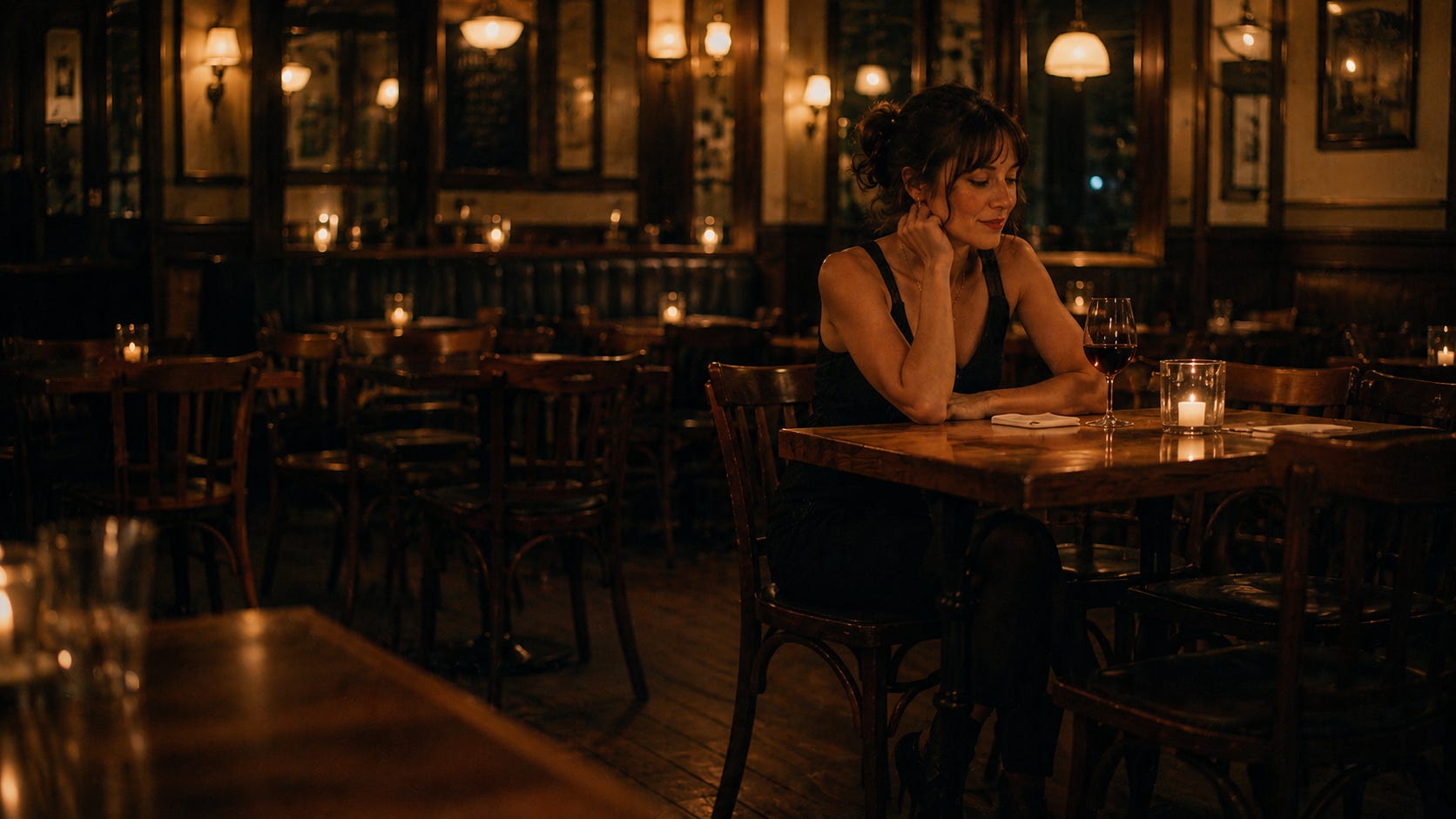
I think about how often the day passes without a single moment of genuine quiet.
Not silence in the acoustic sense but silence in the sense of being with our own thinking without immediately filling it with something. A podcast. A scroll. A conversation that isn’t really necessary but fills the space before the thinking gets too loud. Most people move through entire weeks without ever being genuinely alone with themselves for more than a few minutes at a time.
And then they wonder why they feel vaguely disconnected from their own life. Why the decisions feel like they belong to someone else. Why the direction feels unclear even when everything is objectively fine.
The Stoics understood this with a precision that still feels startling.
Seneca wrote that the person who cannot bear to be alone cannot bear to be with themselves and that this inability is not a social problem but a philosophical one. It means the inner life has been left unexamined. The thinking has been left unattended. The person has been so busy maintaining the external version of their life that the interior version has been quietly going without care.
He was not being harsh. He was being diagnostic.
The person who has never learned to be alone has never learned to listen to the only voice that actually knows the whole story.
There is a version of solitude that most people never reach because they confuse the discomfort of the first ten minutes with evidence that it isn’t working.
The first ten minutes of genuine solitude are almost always very uncomfortable. The thinking that surfaces is not pleasant or insightful or peaceful. It is the backlog of the things that have been waiting for a gap in the noise to get through. The worry we have been outrunning. The question we have been too busy to answer. The feeling that has been sitting in the waiting room since last Tuesday.
Most people hit that discomfort and immediately reach for something to fill it.
The phone. The television. The sudden memory of something that needs doing. The human mind is extraordinarily creative when it comes to generating reasons to not sit still.
But the backlog is not the enemy. It is the point.
The discomfort of those first ten minutes is the cost of entry. What comes after it is when the backlog has cleared and the noise has settled and something quieter surfaces. This is the part that most people never reach because they left before it arrived.
What comes after is genuine thinking. The kind that belongs to us rather than to the situation we are reacting to. The kind that produces clarity rather than more noise. The kind that tells us, if we listen honestly, what we actually think about our own life.
That is what solitude produces.
Loneliness never produces it because loneliness is oriented outward towards relief, towards company, toward the resolution of the ache. Solitude is oriented inward. And inward is where the useful things are.
I started building solitude into my life deliberately about two years ago.
Not in a dramatic way. Not a retreat or a meditation practice or anything that required explaining to anyone. Just thirty minutes in the morning before anything else started. No phone. No music. A notebook if something needed writing down. Nothing else.
The first week was genuinely uncomfortable for me. The second week was slightly less so. By the third week something had shifted but not dramatically, but noticeably. The decisions I was making felt more like mine. The thinking felt cleaner. The day had a quality to it that I had been missing for longer than I realised.
What I had been missing was a relationship with my own mind.
Not with productivity or clarity or focus in the performance sense. With the actual contents of my own thinking of what I genuinely believed, what I actually wanted, what I was carrying that needed to be put down. That relationship had been neglected for years because I had been moving too fast and filling too many gaps to ever sit with it honestly.
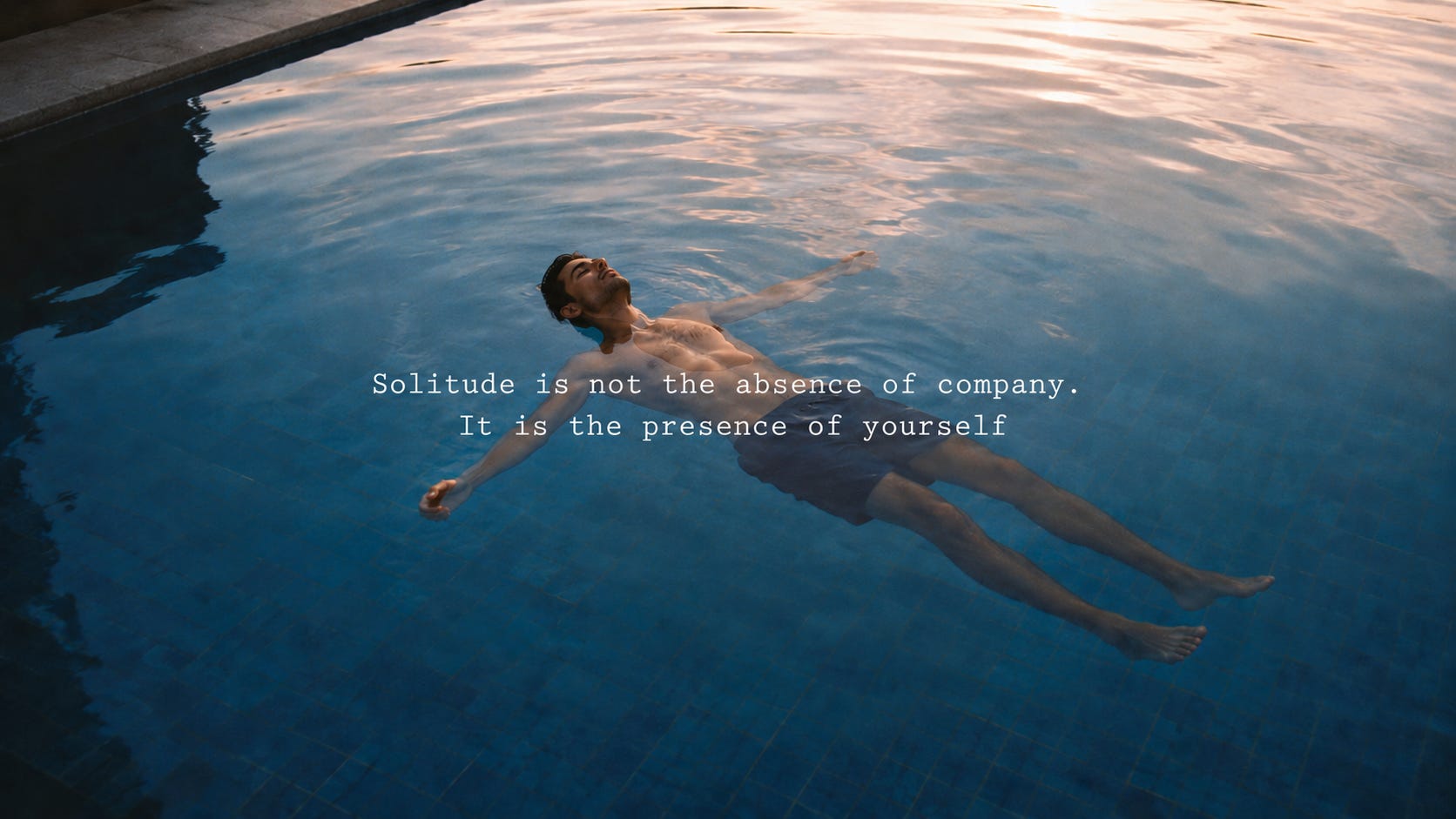
Solitude was not the absence of company.
It was the presence of myself.
The distinction matters more now than it probably ever has.
The modern version of constant connection of the notifications, the feeds, the infinite availability of something to look at has made genuine solitude genuinely difficult in a way it simply wasn’t before. It is not that people are choosing noise over quiet. It is that the noise has become so ambient, so constant, so woven into the texture of a normal day, that the absence of it now feels abnormal rather than natural.
And in that environment, the person who has learned to sit with themselves and who has built a genuine relationship with their own thinking, who can be alone without immediately filling the space has something increasingly rare.
Not peace in the abstract sense. Something more useful than that.
They know what they actually think. They know what they actually want. They are not easily moved by other people’s urgency because they have a settled enough relationship with their own interior life that external noise doesn’t immediately colonise it.
That is not a personality type. That is a practice.
And like most practices it starts small and becomes, over time, simply part of how you live.
The place to begin is not a thirty day challenge or a digital detox or anything that requires preparation.
It is ten minutes tomorrow morning before anything else starts.
No phone. No podcast. No agenda. Just the room you are in and whatever is in your thinking when you stop trying to manage it.
It will be uncomfortable. Sit with the discomfort rather than resolving it. The discomfort is not evidence that it isn’t working. It is evidence that it is.
The backlog will clear. It always does. And what comes after it is worth the ten minutes.
Do it again the next day. And the one after that.
That is the whole instruction. What it produces over weeks and months of genuine practice is something that cannot be shortcut or acquired any other way.
A person who is no longer a stranger to themselves.
And once you are no longer a stranger to yourself, a different question becomes possible. Not the question of how to be alone with your thinking. The question of what to do with what you find when you are.
That question is worth sitting with for a while.
Most people never get there because they never built the foundation.
You now have the foundation to go on that journey.
Talk Soon,
Pathsofstoicism
“It’s what you do with what you find out”
I was an only child and used to being on my own. As a child and teenager I was often lonely. This hurts from the inside because I yearned for company like most young people. However, I soon accepted what I couldn’t change and this was the first step towards coming to terms with the situation - not to fight reality but to embrace it. With God’s help I learned to enjoy my own company. Solitude is not a threat - instead it creates space to be who one is and puts a whole different perspective on life - life is worth living.