
The Self That Survives
The hard seasons, the scaffolding that falls away, and the quieter person standing after everything
In the winter of 1944, Viktor Frankl arrived at Auschwitz with a manuscript sewn into the lining of his coat.
The guards found it in the first inspection. They took it without ceremony, the way they took everything.
He watched it go.
What he wrote about afterward was not the suffering but what he noticed happening to the people around him. How some contracted under the pressure, becoming smaller and more desperate versions of whoever they had been before. And how others did something different.
Not harder. Not more stoic in the performative sense.
Just clearer.
As if the difficulty had stripped away everything that wasn't essential, and what remained was more genuinely themselves than anything that existed before.
He called this the last human freedom. The freedom to choose who you are inside whatever is happening to you.
Most of us will never be tested like that. This is, obviously, a good thing.
But what he described operates at every scale. The hard season you are in, or the one sitting quietly in your past that you have not fully examined yet, was doing the same thing.
Not to the same degree.
In the same direction.
We treat hard seasons as interruptions.
As something life is doing to us temporarily, before the real version can resume. And so we spend them trying to get back to who we were, back to the conditions that felt familiar, back to the version of ourselves that existed before everything got rearranged.
The story we tell ourselves goes like this: something hard happens, we get through it, we come out the other side changed and stronger. The hard thing was the fire and we are the gold that remained.
It is a clean story but it is also missing the most important part.
Because the self we are trying to get back to is almost always the self the hard season was quietly asking us to outgrow.
Musonius Rufus was exiled from Rome twice. Not for anything violent but for speaking honestly in a climate that had stopped rewarding honesty. He was removed from his students, his work, his place in the world, and sent somewhere designed to feel like erasure.
He kept teaching. He kept writing. He kept examining his own thinking with the same rigour he had applied inside the comfort of the city.
Not because he was performing resilience. Because he had understood something quietly and completely.
The conditions of your life are not the obstacle to your life. They are the material of it.
Whatever season you are in right now is not the waiting room.
It is the room.
Here is what a hard season actually does, underneath all the difficulty.
It removes things.
Not just the obvious things like the relationship, the job, the plan that turned out to be wrong. The more subtle things too such as the roles we played because the situation required them. The certainty we performed because the people around us needed someone to seem certain. Someone solid. The identity we carried forward because it was easier than examining it.
All of that is held in place, quietly and invisibly, by comfortable and favorable conditions.
But when the conditions change, the scaffolding comes down.
And what remains in the quiet, in the difficult ordinary mornings, in the moments when there is nothing left to manage or maintain is just the person who was always there underneath it.
Not an improved version. Not a healed one. Not someone who has figured anything out.
Just the actual one.
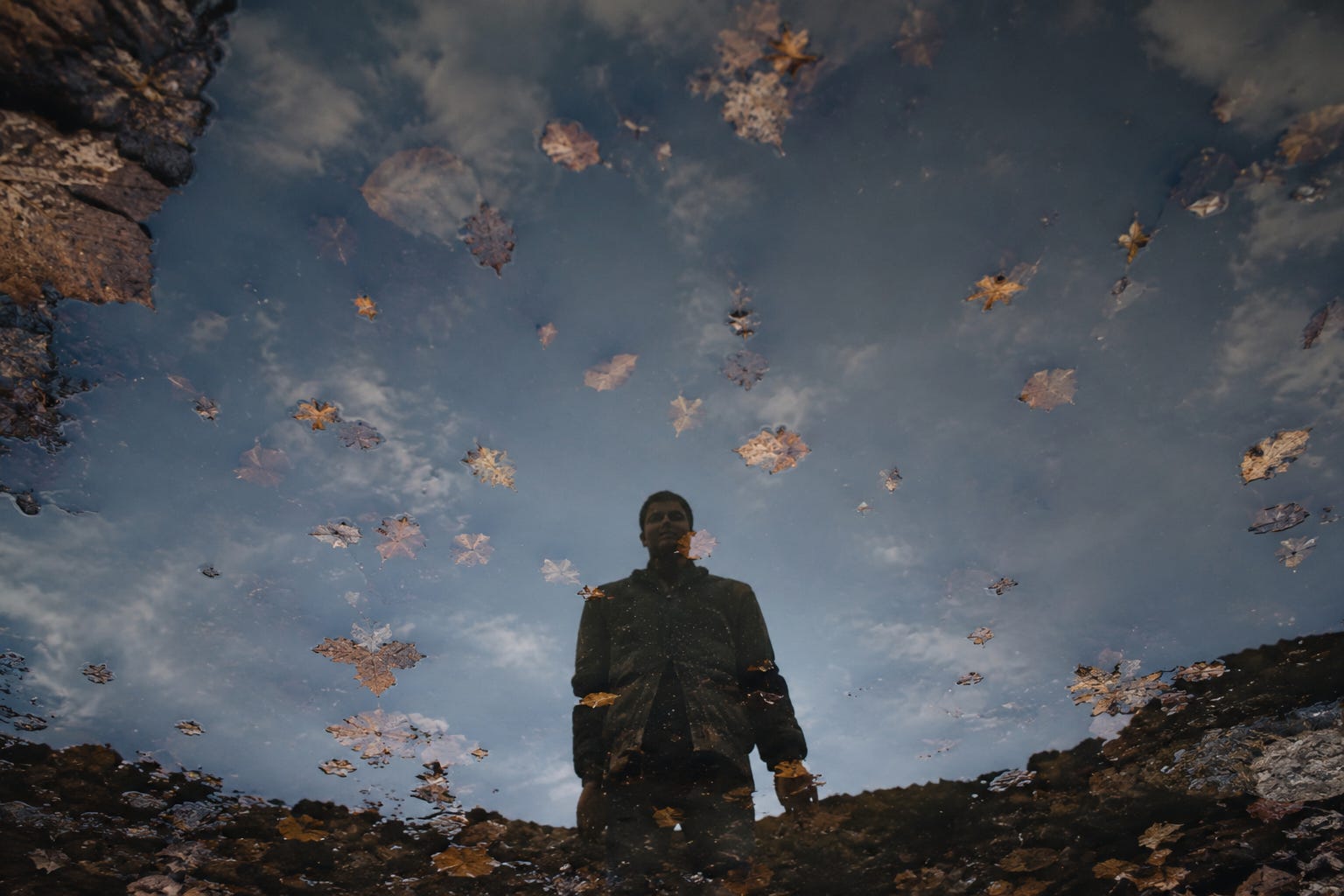
I remember the specific moment I understood this.
Not a dramatic moment. No sudden clarity, no morning where everything made sense. Just an afternoon sitting completely still, genuinely having nothing left to do. No problem to solve, no next step to plan, no version of busyness left to reach for.
And in that stillness, something that had been waiting patiently arrived.
Not an answer. Just an honest look at who was actually sitting there.
It was one of the most uncomfortable moments of that entire season.
It was also the most clarifying thing that happened in it.
The most natural response we have for a hard season is to end it as quickly as possible.
There is nothing wrong with wanting this. The desire to be through it, to feel like ourself again, to wake up one morning and find the weight has lifted that is not weakness. It is just human nature.
But there is a specific cost to moving through difficulty without moving through it honestly.
Seneca called the people who avoided this the occupied ones. Not lazy people. The most diligent, capable, impressively busy people he knew. People whose days were so full there was no room left for a life to actually happen inside them.
He wasn’t being unkind when he wrote about them.
He was being precise.
The person who moves through a hard season at full speed , solving, managing, staying productive, getting to the other side efficiently usually comes out intact.
But they come out the same person who went in.
The season passed. The scaffolding came back up. The version of themselves the difficulty was trying to show them never quite came into focus, because there was never a moment of stillness long enough to look honestly at what was there.
This is the thing most people don't realise until much later but when they look back at a hard season and feel, underneath the relief of having survived it, a faint sense that something was missed. Not something external. Something they were supposed to see about themselves that they kept themselves too busy to look at.
You cannot fast-forward to who you become. You have to go through who you are first.
The other side of a hard season is not a transformation.
It does not arrive in a moment and it does not feel, when it comes, like arrival. There is no morning where everything is suddenly clear to us. No day we will be able to point to later as the turning point.
It feels more like recognition.
One ordinary day we notice that we are thinking differently. Not better, necessarily. Just more honestly. The things we used to need in order to feel okay are slightly less urgent. The approval we used to organise yourself around has loosened its grip a little.
The version of success that we were chasing starts to look like someone else’s definition.
And we find, quietly, that we are no longer interested in defending it.
That is not healing. That is not growth in the way the word usually gets used.
That is just who we are when the noise has been quiet long enough.
Cato spent the final years of his life watching everything he had stood for dismantled piece by piece. The people around him adjusted. Found ways to make peace with the new reality. Discovered that their principles had more flexibility than they had thought.
Cato didn’t adjust.
Not because he was stubborn. Because by then he simply knew who he was. The hard seasons had made sure of that. And once you know who you are with that kind of clarity, being asked to perform a different version of yourself stops feeling like a temptation.
It stops feeling like anything at all.
We are not holding a line but are just being ourself, completely, in a situation that is asking us to be someone else.
That kind of clarity does not come from the easy seasons.
It only comes from the ones that stripped something away.
Frankl rewrote his manuscript from memory after the war ended.
He wrote it in nine days.
Not because he was trying to prove something. Because the hard season had shown him, with a clarity that comfortable years never could have, exactly what he believed and why.
The manuscript the guards took is gone.
What replaced it was written from memory, from the other side of something unimaginable which turned out to be one of the most read books of the twentieth century.
The hard season did not make him who he was.
It showed him.
And once he knew, there was nothing left to do but write it down for us.
The question worth asking is not how to get through the hard season but how to get through it without missing what it came to show you. The Stoics built specific practices around exactly this not to manufacture suffering, but because self-knowledge doesn't just happen. It requires deliberate examination, while the stripping is still happening and the person underneath the structure is still visible enough to meet. That is what follows. Practices for the person who wants to come out of the hard season knowing something real and not just relieved that it's over.
